
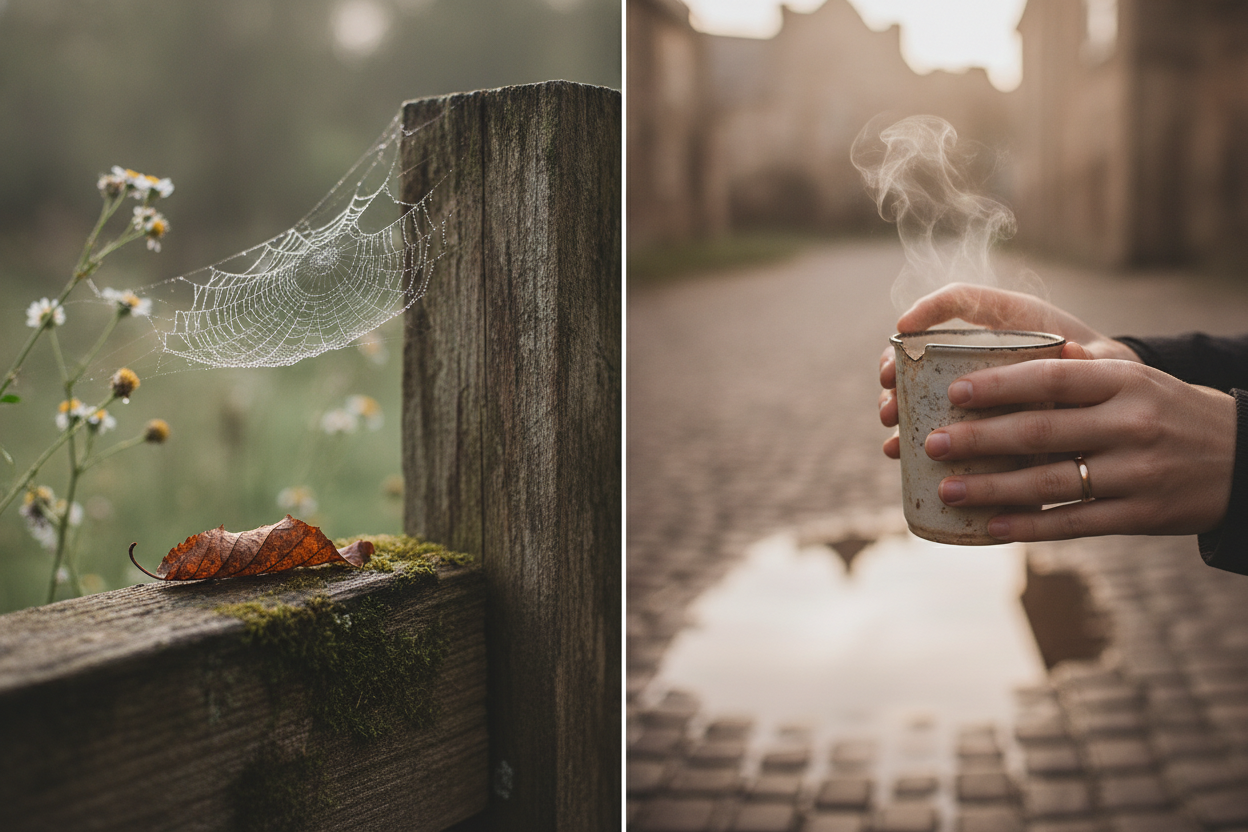
Some of the most memorable poems begin with the smallest details. A chipped cup, a half-open window, a streetlamp after rain, or a voice heard in passing can carry more emotional charge than a grand scene. Poetry has a way of turning these modest moments into something resonant, because it asks the reader to slow down and notice what is often overlooked.
Writing with small details also encourages precision. Instead of explaining everything, you can suggest feeling through image and sound. A single object can imply memory, distance, comfort, or loss depending on how it is placed in the poem. That kind of subtlety gives the reader space to enter the work and bring their own experience to it.
For a site like MUNA, poems built from observation can create a quiet thread across different interests. A photograph may capture a similar moment. A run may reveal the same street. A building may hold the same texture of light. When the details connect, the site feels more like a living creative journal than a static collection of separate pieces.
To keep this approach fresh, notice what changes from one day to the next. The same object can look entirely different in new weather or a different mood. That is one of poetry’s greatest strengths: it helps ordinary life feel newly seen. And when readers feel that shift, they often feel it deeply.
Leave a Reply