
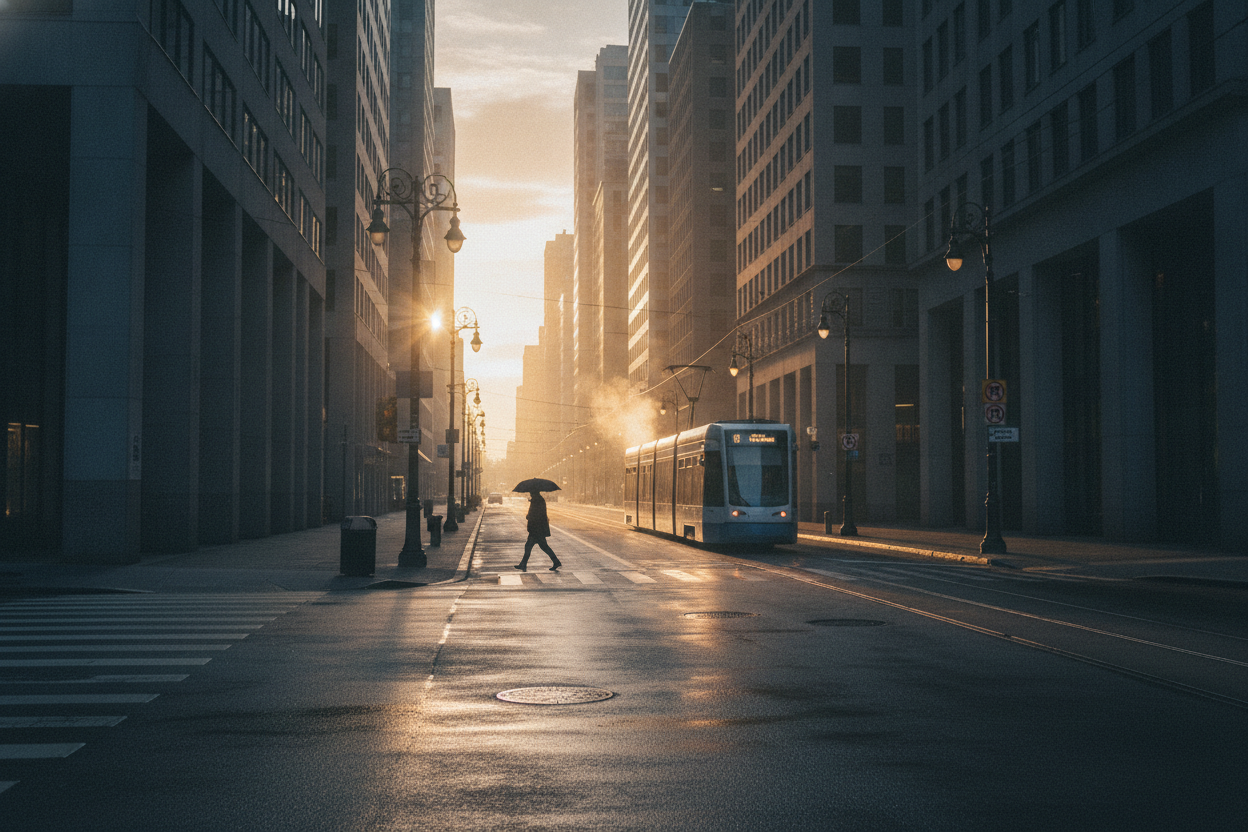
City light changes everything. It can make a street feel cinematic, soften a building’s edge, or turn an ordinary corner into something worth remembering. For photographers, paying attention to light is often the difference between a simple record and an image that holds emotional weight. Urban spaces are especially rich because surfaces, glass, metal, and concrete all respond differently as the day moves on.
A useful habit is to revisit familiar places at different times. Morning light can feel clean and quiet, while evening light introduces warmth and shadow. Night scenes bring reflections, contrast, and a sense of distance. By observing these shifts, you begin to see how timing changes the mood of an image and the story it tells.
Light also connects beautifully with architecture. Lines and materials become more expressive when they are touched by a strong angle or a soft glow. That makes the city an excellent subject for anyone who enjoys both structure and atmosphere. A photograph can document a place, but it can also interpret it.
For a portfolio blog, sharing urban photography gives visitors a direct way to experience your eye. A short reflection on where the photo was taken and what caught your attention can add depth without overwhelming the image itself. That balance is ideal for a site like MUNA, where creative work should feel accessible, clean, and personal.
Leave a Reply